

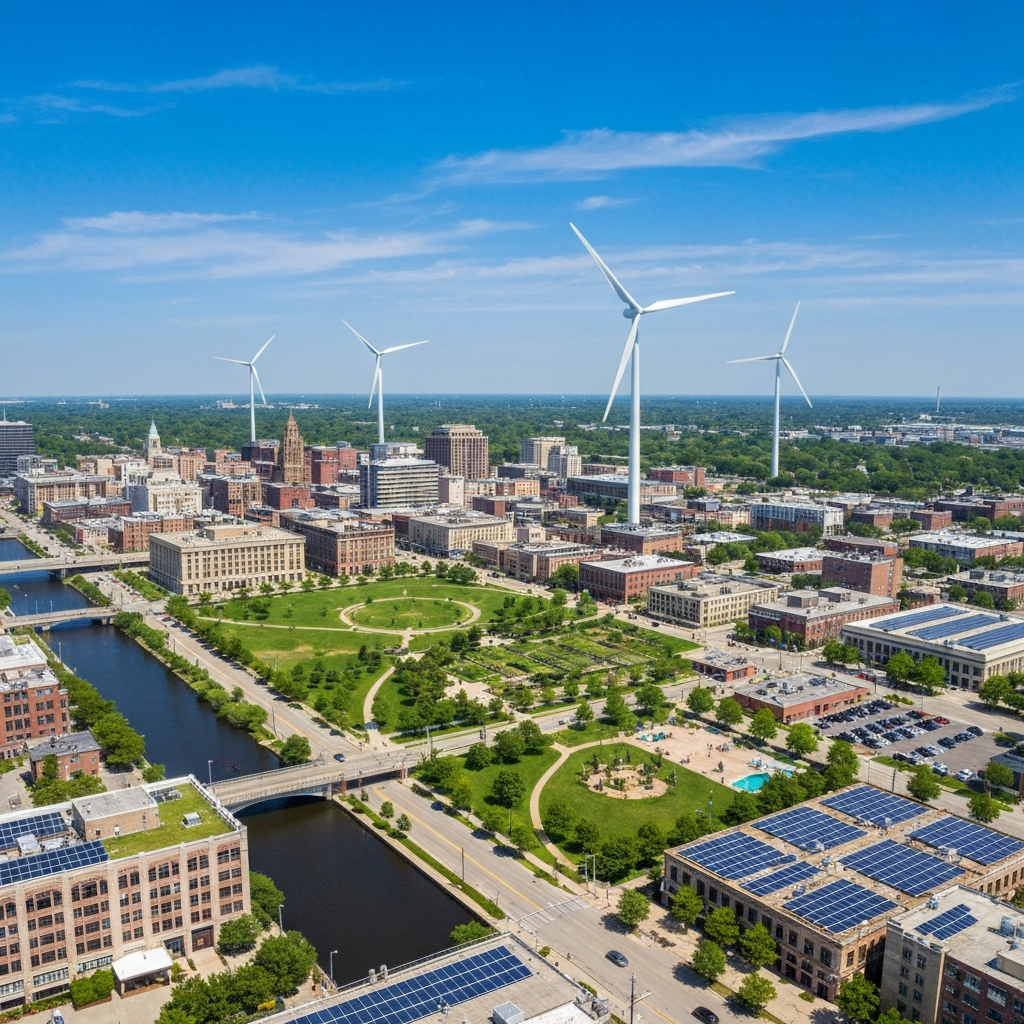
Milwaukee is actively implementing initiatives to combat climate change and promote environmental sustainability. The city’s Environmental Collaboration Office (ECO) leads efforts to make Milwaukee a world-class eco-city by developing practical solutions that enhance residents’ lives and protect natural ecosystems.
Milwaukee Climate and Equity Plan
Adopted in 2023, the Milwaukee Climate and Equity Plan outlines ambitious goals to reduce community greenhouse gas emissions by 45% by 2030 and achieve net-zero emissions by 2050. The plan emphasizes improving racial and economic equity by creating green jobs that pay at least $40,000 and focus on recruiting local people of color. Achieving these objectives involves collaboration among government agencies, businesses, community organizations, and other partners, with financing primarily from new federal resources, including the Inflation Reduction Act.
Environmental Collaboration Office Initiatives
ECO spearheads various programs to advance sustainability in Milwaukee:
- Renewable Energy in City Operations: ECO supports the adoption of renewable energy sources to power city operations, contributing to the reduction of greenhouse gas emissions.
- Home Energy Grants: The office offers grants to residents for energy-saving home improvements, such as insulation and efficient heating systems, helping to lower energy bills and reduce carbon footprints.
- Electric Vehicle (EV) Charging Network: ECO is developing a public EV charging network with plans to establish 53 sites by 2030, promoting cleaner transportation options.
- Food Waste Challenge: This initiative aims to reduce food waste through composting and soil improvement, addressing food insecurity and promoting sustainable waste management practices.
Port Milwaukee’s Sustainability Efforts
Port Milwaukee is committed to minimizing environmental impacts through several initiatives:
- Wind Turbine: The port operates the city’s only wind turbine, providing clean electricity to power all of Port Milwaukee’s administration building needs.
- Green Marine Program: Participation in this voluntary program aims to strengthen the maritime industry’s environmental performance.
- StewardSHIP Incentive Program: This program offers docking fee discounts to shipping lines that have implemented emission reduction measures and other environmental improvements to their vessels.
Milwaukee Metropolitan Sewerage District (MMSD) Sustainability Goals
MMSD envisions a healthier Milwaukee region and a cleaner Lake Michigan through leadership in attaining zero overflows, zero basement backups, and improved stormwater management. The 2035 Vision focuses on integrated watershed management and climate change mitigation with an emphasis on energy efficiency. Key energy goals include meeting 100% of MMSD’s energy needs from renewable sources, achieving 80% from internal renewable sources, and reducing the carbon footprint by 90% from the 2005 baseline.
Milwaukee County’s Climate Action 2050 Plan
Milwaukee County has developed the Climate Action 2050 Plan to reduce carbon emissions from county operations and adapt to climate change. The plan serves as a roadmap for the county to achieve net-zero carbon emissions while advancing equity, justice, and resilience. The Office of Sustainability coordinates the county’s environmental sustainability program, promoting environmental stewardship and emissions reduction in government operations, infrastructure, and services.
Through these comprehensive efforts, Milwaukee demonstrates a strong commitment to environmental sustainability and climate action, aiming to create a healthier and more equitable future for all residents.