

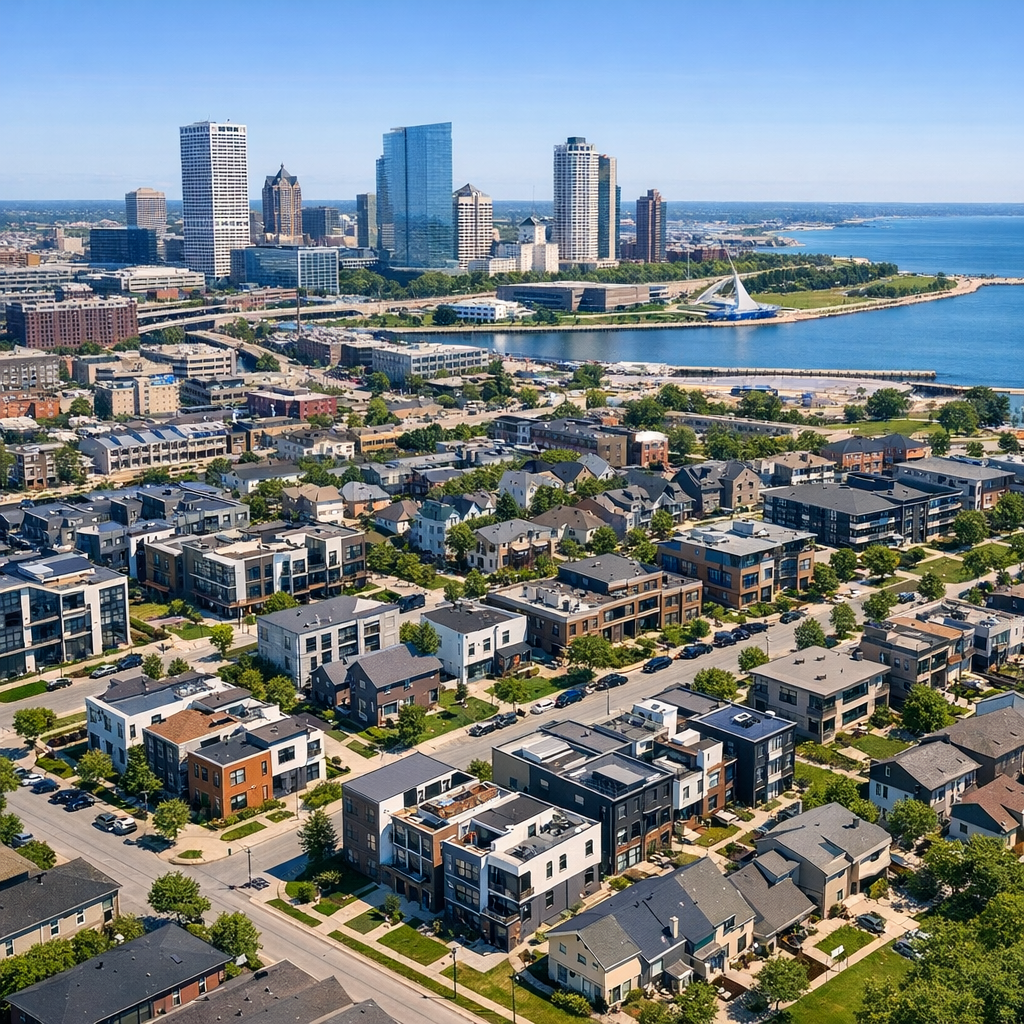
Milwaukee’s housing market is experiencing notable shifts, with trends indicating a dynamic landscape for both buyers and renters. Understanding these changes is crucial for making informed decisions in the current real estate environment.
Current Market Trends
Recent data reveals a significant increase in housing inventory. In April, active listings rose by 27.2% year-over-year, reaching 995 homes. This surge provides buyers with more options and negotiating power. Concurrently, the median list price dipped by 1.3% to $227,000, suggesting a slight easing in pricing pressures. Homes are also spending more time on the market, with the median days on market extending to 35 days, up 15% from the previous year. Despite this increase, Milwaukee’s market remains more active than the national average, where the median is 52 days. Source
Rental Market Dynamics
The rental sector mirrors this activity. The median rent in Milwaukee stands at $1,400 per month, reflecting a 7.69% year-over-year increase. This uptick underscores a robust demand for rental properties, influencing both availability and affordability. Source
Notable Developments
Several initiatives are underway to address housing needs. The Fieldhouse Flats project, developed by J. Jeffers & Co. in partnership with the Milwaukee Bucks, aims to provide modern, affordable living spaces. Located at the corner of MLK and McKinley, this development integrates apartments with access to a state-of-the-art athletic facility, retail spaces, and a public plaza, fostering a vibrant community atmosphere. Source
Additionally, the Milwaukee Department of City Development has proposed two new Tax Incremental Finance Districts to support affordable housing projects. These initiatives reflect the city’s commitment to expanding housing options and ensuring accessibility for a diverse range of residents. Source
Conclusion
Milwaukee’s housing market is in a state of flux, characterized by increased inventory, evolving rental dynamics, and proactive development projects. Staying informed about these trends is essential for residents and investors navigating the city’s real estate landscape.