

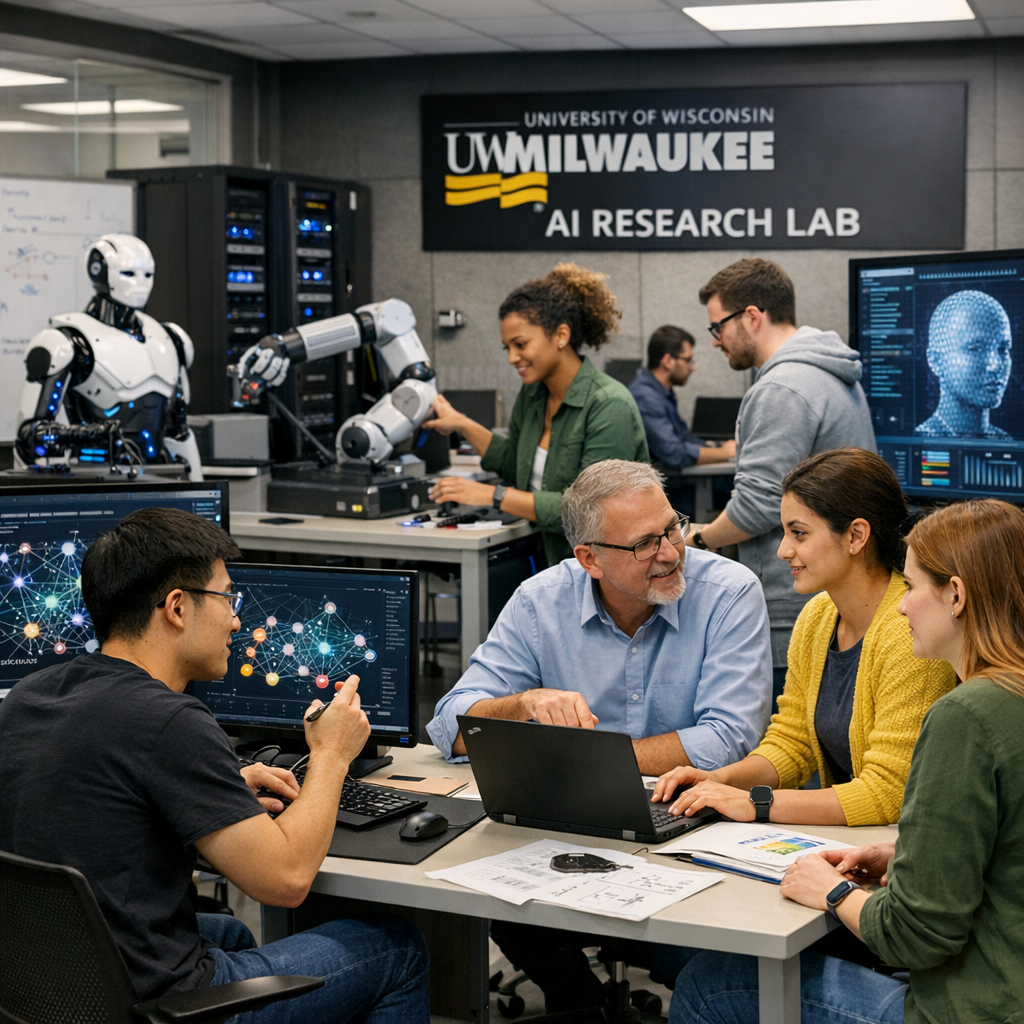
Milwaukee is rapidly establishing itself as a center for artificial intelligence (AI) innovation, with recent developments highlighting the city’s commitment to integrating advanced technologies into its industrial and educational sectors.
Microsoft’s AI Co-Innovation Lab at UWM
In June 2025, Microsoft, in collaboration with the Wisconsin Economic Development Corporation (WEDC), the University of Wisconsin-Milwaukee (UWM), and TitletownTech, inaugurated an AI Co-Innovation Lab on the UWM campus. This facility is dedicated to advancing manufacturing innovation through AI solutions. The lab has already engaged with local companies to develop AI applications such as real-time fault detection in industrial machinery and multilingual voice assistants to streamline logistics operations.
Emerging AI Startups
Milwaukee’s startup ecosystem is also witnessing a surge in AI-focused companies. Notably, Golgix is leveraging AI for predictive maintenance in manufacturing, while Sift Healthcare is utilizing AI-driven platforms to enhance revenue cycle management in the healthcare sector. These startups exemplify the city’s ‘Rooted Valley’ approach, where AI innovations are deeply integrated into traditional industries.
Supportive Infrastructure and Community
The city’s commitment to fostering AI growth is further evidenced by initiatives like the Wisconsin Frontier Technology Consortium’s launch of the ‘gBETA Frontier Technology’ accelerator. This program aims to support early-stage startups in sectors such as advanced materials, AI, and robotics, providing them with the resources needed to scale their innovations.
Additionally, Milwaukee offers a collaborative tech community with numerous coworking spaces and incubators, such as Ward4 and gener8tor, which provide environments conducive to innovation and growth.
Conclusion
Milwaukee’s strategic investments in AI infrastructure, coupled with a supportive ecosystem for startups, are positioning the city as a burgeoning hub for technological innovation. These efforts not only enhance the local economy but also contribute to the broader advancement of AI applications in traditional industries.