

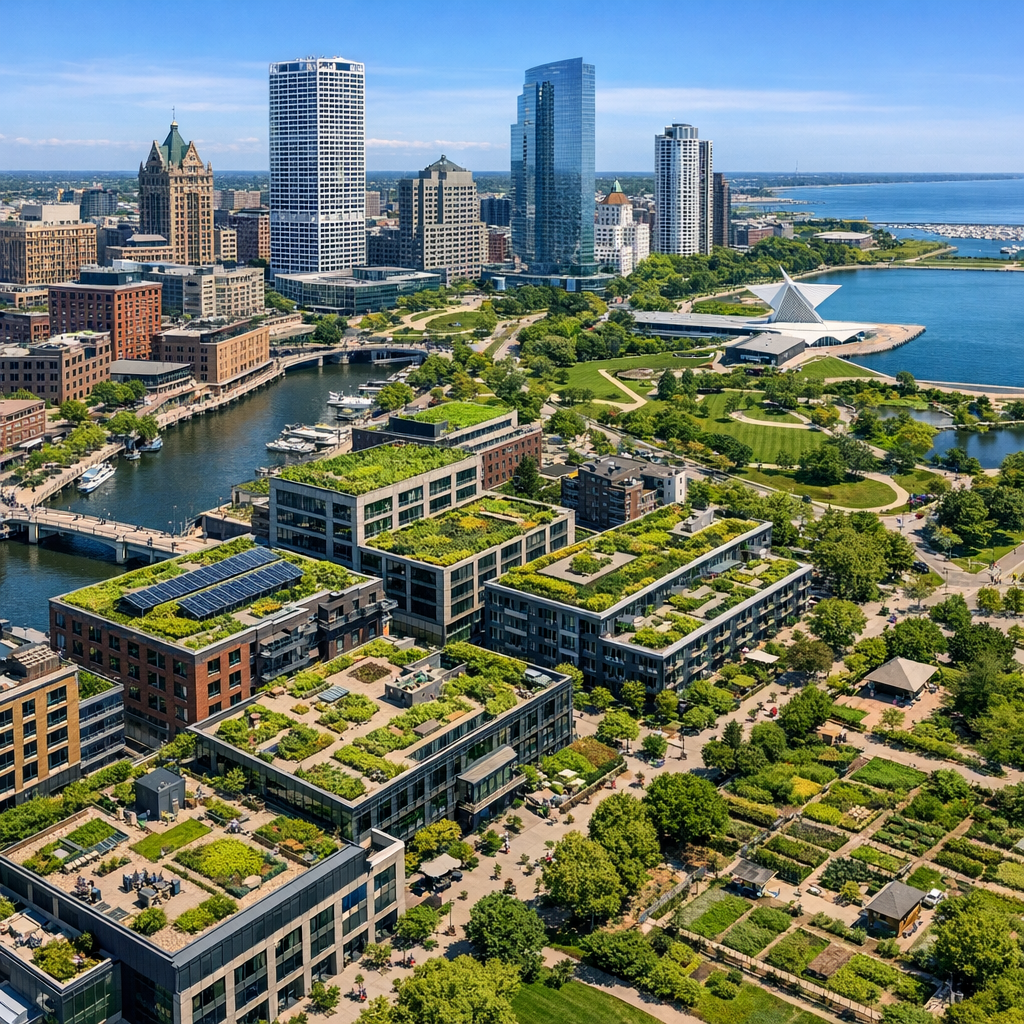
Milwaukee is taking significant steps to address the challenges posed by climate change, aiming to create a sustainable and equitable future for all residents. The city’s proactive approach encompasses comprehensive planning, community engagement, and the implementation of green infrastructure.
Understanding Milwaukee’s Climate Challenges
Milwaukee has experienced a warming trend of 2-3°F since 1950, with projections indicating an additional increase of 2-8°F by 2050. This warming is accompanied by a 10-20% rise in annual precipitation since 1950, leading to more frequent and intense weather events such as extreme heat, heavy downpours, and flooding. These changes pose risks to infrastructure, public health, agriculture, and the Great Lakes ecosystem. Source
The Milwaukee Climate and Equity Plan
In response to these challenges, the city adopted the Milwaukee Climate and Equity Plan, which sets ambitious targets to reduce community greenhouse gas emissions by 45% by 2030 and achieve net-zero emissions by 2050. The plan emphasizes improving racial and economic equity by creating green jobs that pay at least $40,000 annually, focusing on recruiting local people of color. Source
Key Initiatives and Community Engagement
To achieve these goals, Milwaukee has launched several key initiatives:
- Green Jobs Accelerator: A program designed to create employment opportunities in the green sector, targeting underrepresented communities.
- Healthy Home Energy Upgrades: Efforts to improve energy efficiency in residential buildings, reducing emissions and lowering utility costs for residents.
- People-Centered Transportation: Enhancing public transit and promoting non-motorized transportation options to decrease reliance on fossil fuels.
Community involvement is central to these efforts. The ECO Neighborhoods Initiative encourages residents to participate in climate education, planning, and action, fostering neighborhood-level resilience. Source
Green Infrastructure and Urban Resilience
Milwaukee is also investing in green infrastructure to manage stormwater, reduce urban heat islands, and enhance urban resilience. Projects include the installation of green roofs, rain gardens, and permeable pavements. The Greenseams® Program focuses on preserving natural open spaces for flood mitigation and habitat restoration. Source
Looking Ahead
As climate patterns continue to evolve, Milwaukee’s commitment to sustainability and equity remains steadfast. Through comprehensive planning, community engagement, and the implementation of green infrastructure, the city is proactively addressing climate change to build a resilient and sustainable future for all its residents.