

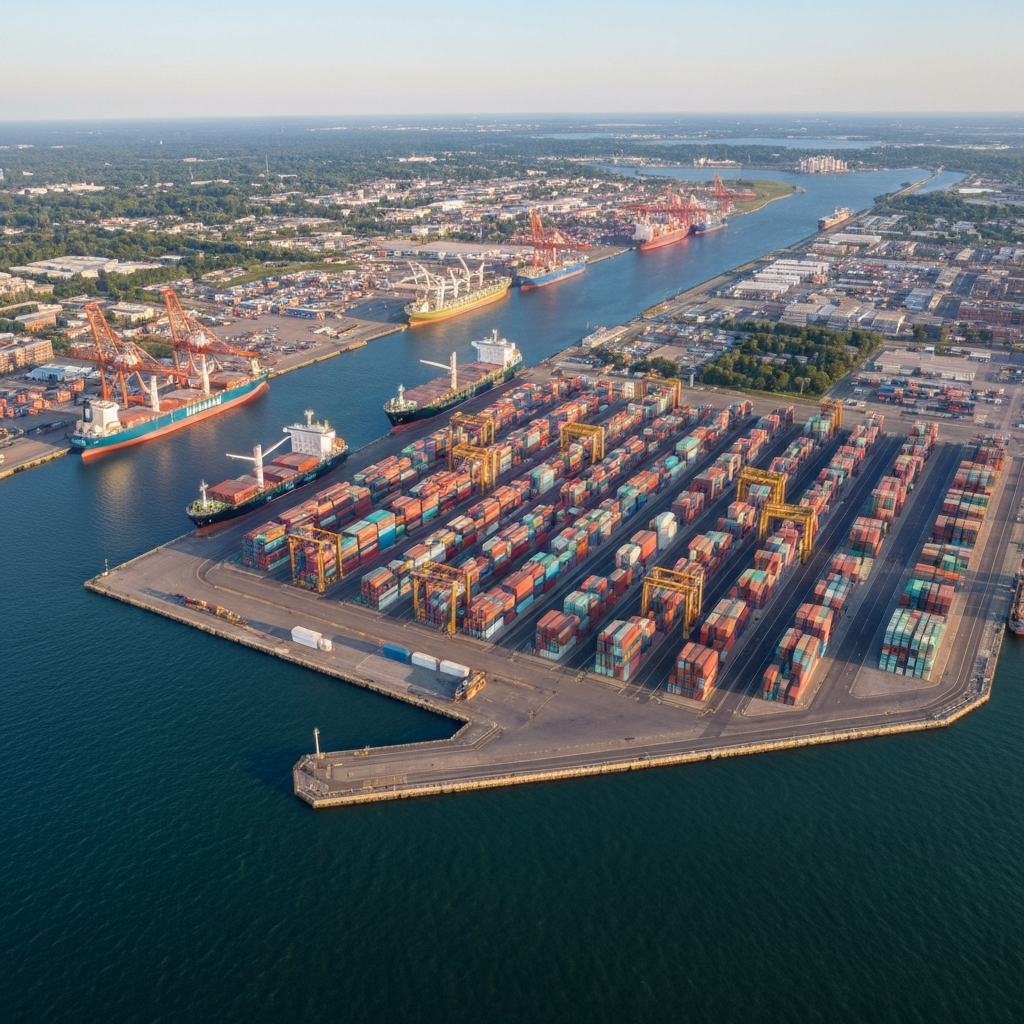
Milwaukee’s strategic position on the western shore of Lake Michigan has long established it as a pivotal hub for international trade and education. The city’s infrastructure and institutions continue to foster robust global connections, benefiting both the local economy and its residents.
Port Milwaukee: A Multimodal Trade Hub
Port Milwaukee serves as a vital multimodal hub, connecting Wisconsin to both domestic and international markets. Handling a diverse range of cargo—from locally produced grain to imported steel—the port is integral to the Midwest’s distribution network. Notably, it stands as the northernmost approved point on the Great Lakes with access to the Inland River System, facilitating direct routes to Gulf Coast ports like Houston and New Orleans via the Mississippi River. This connectivity underscores Milwaukee’s role in fueling regional trade and supporting thousands of local jobs. [Source]
Foreign Trade Zone No. 41
Enhancing its trade capabilities, Milwaukee hosts Foreign Trade Zone (FTZ) No. 41. This designated area allows businesses to store or process merchandise without immediate customs duties, promoting economic growth and competitiveness. Overseen by the U.S. Customs & Border Protection, FTZ No. 41 spans 12 counties in Southeastern Wisconsin, offering companies a strategic advantage in the global marketplace. [Source]
Educational Institutions with Global Focus
Milwaukee’s commitment to international engagement extends to its educational institutions. Marquette University offers comprehensive International Affairs programs, providing students with interdisciplinary courses that prepare them for global careers. Similarly, the University of Wisconsin-Milwaukee’s International Studies program equips students with the skills necessary to navigate and contribute to the global economy. [Source] [Source]
Support for International Trade
Organizations like the Metropolitan Milwaukee Association of Commerce’s World Trade Association (WTA) play a crucial role in supporting local businesses in their international endeavors. As the region’s largest network of exporters, importers, and service providers, WTA offers programs and events that facilitate global business expansion. [Source]
In summary, Milwaukee’s strategic location, coupled with its robust infrastructure and educational institutions, positions the city as a gateway to international trade and education. These global connections not only enhance the local economy but also provide residents with opportunities to engage in and benefit from the broader global community.