

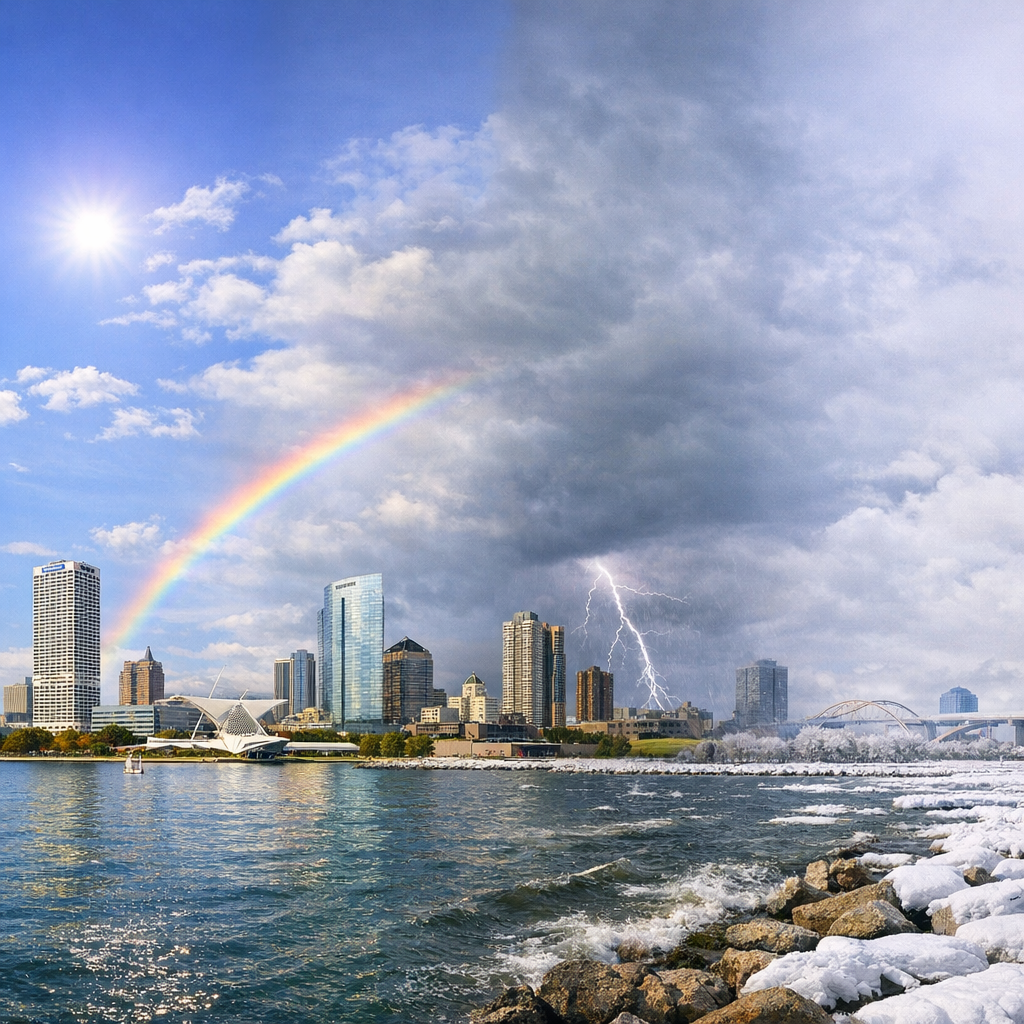
Milwaukee, Wisconsin, experiences a humid continental climate characterized by four distinct seasons, each offering unique weather patterns and challenges.
Seasonal Weather Patterns
Spring (March-May)
Spring in Milwaukee brings a gradual warming trend. Average temperatures range from the 40s to 60s Fahrenheit (4-15°C). Early spring can still feel chilly, with occasional late snowfalls or cold snaps, particularly in April. By May, temperatures become milder, and the city’s parks begin to bloom. Rainfall is moderate, often in the form of showers, and humidity levels increase as the season progresses. It’s advisable to dress in layers and have a waterproof jacket handy to manage the variable conditions.
Summer (June-August)
Summers are warm to hot, with average temperatures ranging from the 60s to 80s Fahrenheit (15-27°C). Occasional heatwaves can push temperatures into the 90s Fahrenheit (30s°C). This season sees the highest humidity levels, especially during July and August, making warmer days feel more intense. Despite the heat, summer is a popular time for outdoor activities and festivals in Milwaukee.
Autumn (September-November)
Autumn offers a respite from the summer heat, with temperatures gradually cooling from the 70s to the 50s Fahrenheit (21-10°C). The city is adorned with vibrant fall foliage, making it a picturesque season. Rainfall is moderate, and humidity levels decrease, providing comfortable conditions for outdoor activities.
Winter (December-February)
Winters are cold and snowy, with average temperatures ranging from the teens to the 30s Fahrenheit (-9 to -1°C). January tends to be the coldest month, with temperatures averaging around 27°F (-3°C). Snowfall is significant, with up to 50 inches (127 cm) most years. The city often experiences lake-effect snow due to its proximity to Lake Michigan, leading to heavier snowfall in certain areas.
Impact of Climate Change
Climate change is influencing Milwaukee’s weather patterns. The state of Wisconsin has warmed by 2-3°F since 1950 and is projected to warm by an additional 2-8°F by 2050. The state has also become 10-20% wetter since 1950, with annual averages projected to increase. Key climate change impacts include more frequent and intense precipitation events, summer droughts, and flooding that threaten health, infrastructure, transportation, agriculture, air and water quality, and more. Extreme storms can increase pollution runoff from land to water, causing sewage overflows and increasing the risk of algal blooms in Lake Michigan.
Understanding these patterns is crucial for residents and visitors to prepare for and adapt to the changing climate in Milwaukee.